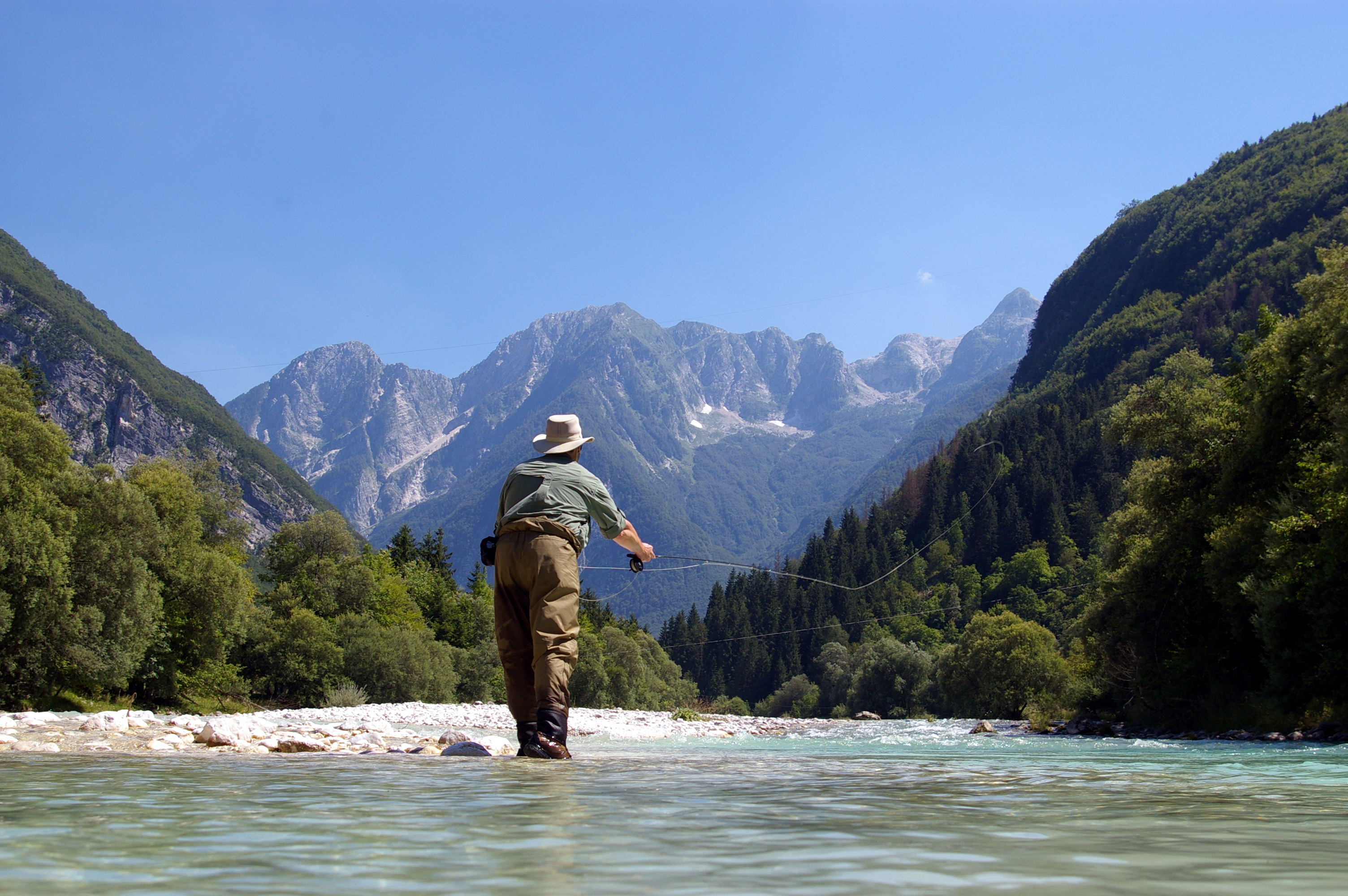
Locating fish before presenting a fly is the part of river fishing that separates consistent results from occasional luck. Trout do not distribute themselves evenly across a stream. Their position at any given moment reflects a balance between energy expenditure, access to food, and proximity to cover — and that balance shifts with season, time of day, and water temperature.
What follows is a framework for understanding why trout hold where they do in Canadian rivers, drawing on principles that apply from the limestone spring creeks of southern Ontario to the large freestone systems of British Columbia.
The energy equation
A trout holding in a river is always solving a simple problem: how to intercept the most food while expending the least energy. Moving water does the work of delivering food — invertebrates, baitfish, and terrestrials all drift downstream — so the fish does not need to chase. What it needs is a position where current carries food past at a manageable speed, with slower water immediately adjacent where the fish can hold without swimming against the full force of the current.
This is why the seam between fast and slow water is consistently the most productive zone in any run. The fast water carries food. The adjacent slow water provides the resting lane. A trout can hold in the slack water, dart out into the seam to intercept a food item, then return. Each intercept costs relatively little energy.
Primary lie types
Understanding the three main lie categories helps narrow a stretch of river quickly:
- Feeding lies — positions where food delivery is high and the fish is actively eating. These are typically seams, riffles, and the tail of pools where current concentrates. Occupied during feeding periods.
- Resting lies — deep, slow water where a fish can conserve energy between feeding periods. Often under cutbanks, behind large boulders, or in the deepest section of a pool. Less accessible to presentation but worth noting.
- Prime lies — positions that offer both food delivery and immediate access to cover. The best spots in any pool. Often occupied by the largest fish in that section.
Structure and what it creates
Any object that displaces current creates a hydraulic that trout can exploit. Boulders generate a cushion of slow water immediately upstream and a longer eddy downstream. The downstream eddy catches and recirculates food, making both locations worth addressing. Log jams create similar hydraulics but also offer overhead cover, which is particularly important in low, clear conditions when trout are wary of aerial predators.
Undercut banks are among the most reliable prime lies in smaller streams. Water scours beneath the bank, creating both cover and a reliable food lane along the bank edge. In the morning, terrestrial insects that fall or are blown from bankside vegetation drift along the margin — making accurate casting to within six inches of the bank genuinely productive rather than a precision exercise for its own sake.
Pool anatomy
A classic pool in a Canadian river has three distinct sections, each of which holds fish differently depending on conditions:
The head of the pool — where faster water enters and slows. Highly oxygenated. Active feeders hold here during hatches. In warm weather, the head is often the most productive section because oxygen levels are highest where water tumbles in.
The body of the pool — the deep, slower middle section. Primary resting lies for larger fish. More difficult to present a fly at the right depth without using weighted flies or sinking lines. Most productive very early in the morning or in low-light conditions.
The tail of the pool — where the pool shallows and current accelerates again. Food concentrates here as it exits the pool. In the evening, large fish move from the body of the pool to the tail to feed in the shallow, accelerating water. The tail is frequently underfished because wading into it spooks the fish — approaching from downstream, kneeling, and presenting a dry fly up through the tail produces results that standing and casting would not.
Water temperature and position
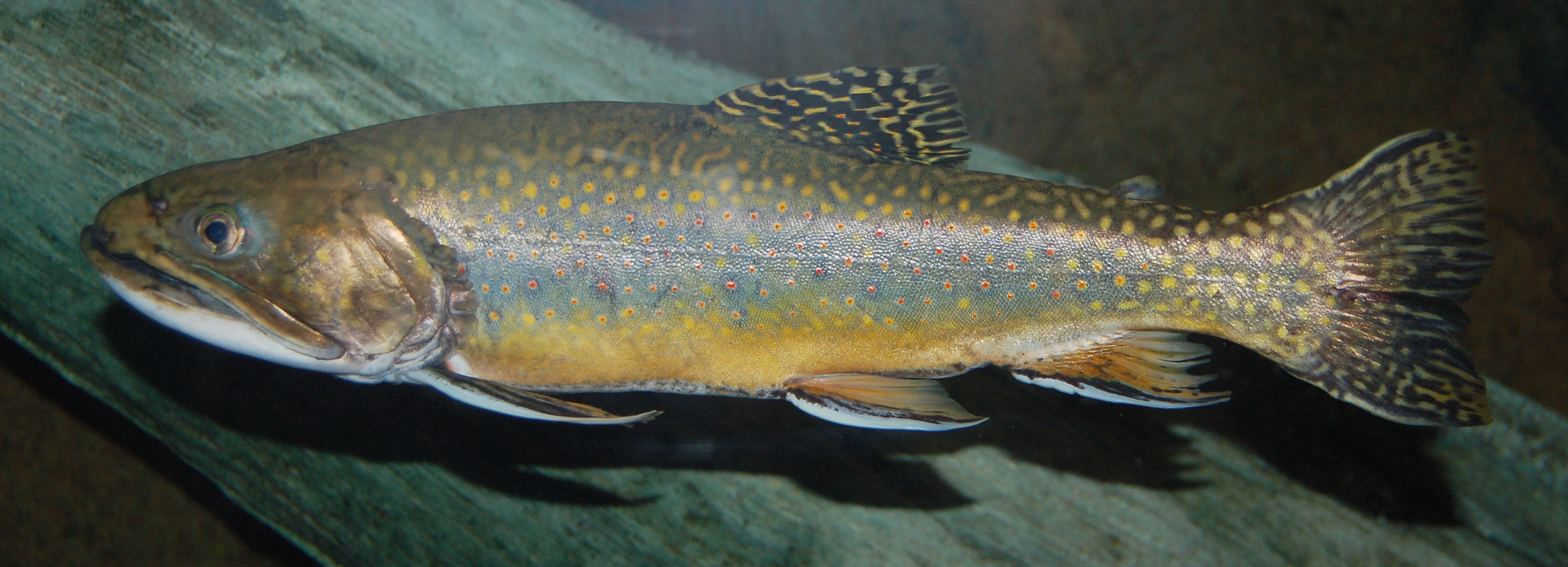
Temperature affects where in the water column and what section of river trout use at different times. Brook trout and rainbow trout feed most actively between 10°C and 18°C. Above 20°C, both species move to cooler tributaries, spring seeps, or deeper water where temperature stratifies. On a warm summer afternoon, a pool that held a dozen fish in the morning may appear empty — because the fish have relocated to the head where cold incoming water maintains a lower temperature.
A thermometer is a useful tool on unfamiliar water. If surface temperatures in the main channel exceed 18°C and the fishing has gone flat, checking tributary mouths and the pool heads where groundwater enters often locates where the fish have concentrated.
Approaching without spooking the pool
Trout in Canadian rivers, particularly those that see fishing pressure, are sensitive to movement and vibration. A standard approach protocol:
- Observe before entering the water. Watch for rises, subtle dorsals, or the white flash of a fish turning on a subsurface food item. Five minutes of observation from the bank frequently reveals what fifteen minutes of random casting does not.
- Enter downstream of your target zone and wade slowly. Each step should be deliberate. Gravel grinding on the riverbed sends low-frequency vibration that fish detect through their lateral line.
- Keep a low profile in open water. Crouching reduces the silhouette visible to the fish and allows presentation from a shorter distance, which improves accuracy.
- Cast across and slightly upstream of a feeding position. Allow the fly to drift drag-free through the feeding lane. The first drift over a trout that has not been spooked is the one with the highest probability of a take.
The first cast into an undisturbed pool is the most valuable cast of the session. Everything after it is diminishing returns on a fish that has seen the fly pass.
Seasonal shifts in holding position
In spring, before water temperatures climb, trout in many Canadian rivers hold in slower, shallower water than they will in summer. The cold water is well-oxygenated throughout the system and the fish do not need to seek out the coldest spots. Mayfly and stonefly hatches draw fish into riffle sections where they feed aggressively at the surface.
By midsummer, the pattern shifts. Trout hold in the deepest and coolest water available during the warmest part of the day. Morning and evening feeding windows become shorter but more concentrated. The fish are in predictable positions, which compensates for the narrower time window.
In autumn, spawning behaviour alters holding patterns entirely. Brook trout and brown trout move toward redds on gravel tailouts. At this point, it is worth noting that disturbing spawning fish — wading through active redds — is directly harmful to the next generation of fish in that system. Many Canadian rivers have voluntary or mandatory closures around spawning areas during October and November.
Further reading
The Ontario Ministry of Natural Resources publishes an annual fishing regulations summary that includes current zone restrictions, possession limits, and seasonal closures. The BC freshwater fishing regulations are available through the provincial government site and updated each spring.