
Catch-and-release is widely practised in Canadian freshwater fishing, particularly on designated trout rivers and in fly-fishing-only sections. The intent is straightforward: return the fish to the water in a condition that allows it to survive and reproduce. Whether that intent is achieved depends on factors that are well-documented in fisheries research, and some of the most common handling practices are more harmful than anglers typically assume.
This article draws on published research on salmonid post-release mortality to outline the conditions and practices with the most measurable effect on outcome.
Water temperature is the most important variable
Multiple studies on rainbow trout, brook trout, and Atlantic salmon consistently identify water temperature as the single strongest predictor of post-release survival. At temperatures below 15°C, properly handled trout show survival rates above 95% in most study conditions. At 20°C, survival rates in the same studies drop significantly — to between 60% and 80% depending on handling duration. Above 22°C, post-release mortality in some studies exceeds 50% even with minimal handling time.
The mechanism is physiological: warm water holds less dissolved oxygen, and a fish that has been fought to exhaustion is already in oxygen debt. Returning it to warm, low-oxygen water before it has recovered adequately means the recovery process is compromised. The fish may swim away from the angler's hands and appear fine, then die within hours.
This has practical implications for summer fishing in Canada. On many southern Ontario rivers, mid-afternoon surface temperatures in July and August regularly exceed 20°C. Several conservation organizations and provincial guidelines suggest avoiding catch-and-release trout fishing when water temperature exceeds 20°C. In British Columbia, some designated waters have summer closures on this basis.
How to check water temperature before fishing
A simple stream thermometer costing under $20 provides reliable readings in seconds. Clip it to a vest or pack. Before starting in unfamiliar water or returning to a river after a warm period, a temperature check at the intended fishing location takes fifteen seconds. If the reading is above 18°C, the risk to released fish is meaningfully higher than it was in spring.
Handling time and its effects
The second most documented variable is out-of-water time. Research on rainbow trout published by Fisheries and Oceans Canada showed that fish held out of water for 30 seconds experienced significantly elevated blood lactate and cortisol levels compared to fish that were kept in the water throughout the unhooking process. At 60 seconds out of water, the physiological stress response in most study fish resembled that of fish fought for considerably longer durations.
A guideline that appears in both Canadian fisheries management documents and angling organization recommendations: if the unhooking process is taking more than 15–20 seconds, return the fish to the water for recovery before completing the release. This applies even if the fish appears settled — the internal physiological state is not visible from the outside.
Hook choice and injury location
Barbless hooks remove more quickly and cause less tissue damage during removal. Studies comparing barbed and barbless hooks in catch-and-release contexts consistently show lower handling time with barbless, which translates to lower stress regardless of whether hook-related injury is a factor. Several Canadian provincial regulations mandate barbless hooks in designated catch-and-release waters, particularly in BC and Ontario's fly-fishing-only sections.
Injury location matters independently of hook type. A fish hooked in the lip can be unhooked quickly with minimal tissue damage. A fish hooked in the gills or deeply in the throat is difficult to release without causing bleeding, and the survival rate in these cases drops significantly regardless of water temperature or handling time. In such situations, provincial regulations in many Canadian jurisdictions require the fish to be retained if it is legal size — a provision worth being aware of.
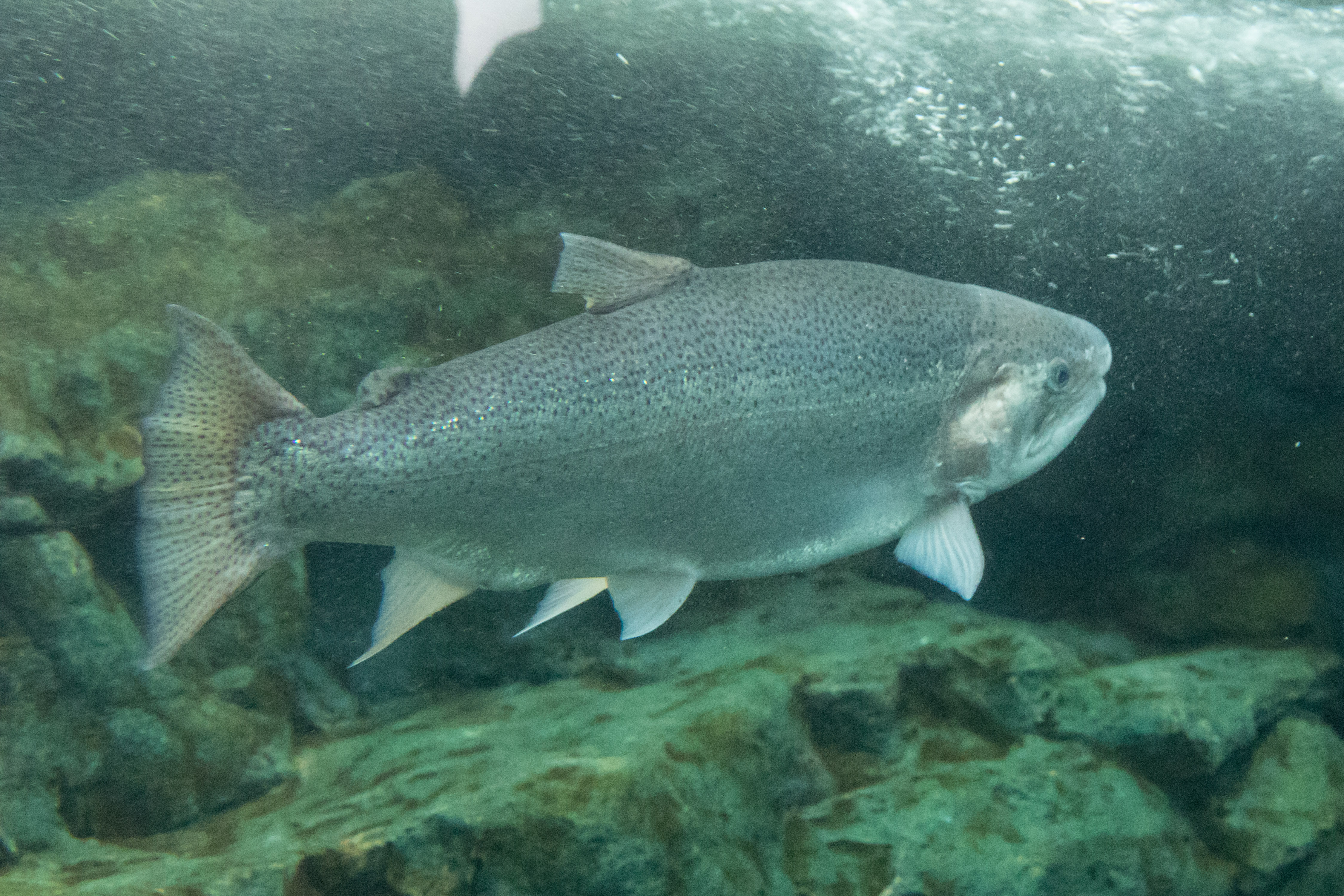
Handling practices that affect survival
The following practices have documented effects in fisheries research:
- Keep the fish wet. Handling a fish with dry hands removes the protective mucus layer. Wet hands cause significantly less mucus disruption. Gloves are more problematic than bare wet hands because they have higher friction.
- Support the fish horizontally. Holding a fish vertically by the jaw stresses the jaw joint and internal organs. A fish held horizontally with one hand under the body behaves more calmly and shows less stress response in post-capture studies.
- Do not squeeze. Internal organ damage from excessive grip is not visible at the time of release but contributes to delayed mortality. Hold firmly enough to control the fish, not more.
- Use a landing net with a rubberized mesh. Traditional knotted nylon mesh nets abrade the mucus layer and scale edges more than rubber mesh. Many Canadian fishing retailers now stock rubber-mesh catch-and-release nets as the standard option.
- Allow full recovery before releasing. Hold the fish in the current, facing upstream, until it actively pulls away under its own power. A fish that drifts away belly-up when released has not recovered. Retrieve it and continue the recovery hold.
Northern pike — different physiology, different considerations
Northern pike are physiologically more resilient than salmonids in warm-water conditions but present a different handling challenge: their teeth. A pike that is insufficiently controlled during unhooking can cause significant hand injury, and the instinct to rush the process increases the risk of both injury to the angler and damage to the fish.
Long-nose pliers and a jaw spreader allow safe, controlled hook removal from a pike's mouth without putting hands near the teeth. Pike can be held vertically by the lower jaw because their body structure tolerates it better than trout — the jaw lock grip is the standard hold among guides on northern Ontario and Quebec pike waters. Even so, the same water temperature considerations apply: post-release survival rates decline at temperatures above 24°C.
Photography and what it costs the fish
Catch photographs are common and not inherently harmful, but they extend out-of-water time and require the angler to prioritize photography over the fish's recovery. A photograph taken in under ten seconds while the fish is partly in the water causes measurably less stress than one taken over thirty seconds with the fish fully elevated.
Underwater photography using a camera or waterproof phone case, with the fish held in the shallows and photographed through the surface or just beneath it, is increasingly common among guides and anglers on fly-fishing-only waters. The results are often better images and demonstrably lower handling impact.
Regulations on catch-and-release in Canada
Several Canadian waters designate sections as mandatory catch-and-release, often combined with single-hook and barbless requirements. These designations are listed in the annual provincial fishing regulations summaries. On some systems — BC's Bulkley River for steelhead, Ontario's Nottawasaga and its tributaries for certain salmonid species — catch-and-release is the only legal option regardless of the angler's intentions.
Current regulations for each province are published annually:
- Ontario Fishing Regulations Summary
- BC Freshwater Fishing Licence and Regulations
- Alberta Fishing Licences and Fees
A fish returned to the water in poor condition is not effectively released — it is a delayed harvest. The effort put into a proper release is the same effort that keeps a fishery productive for the next season.
Summary
The variables with the most documented effect on post-release survival in Canadian freshwater species are water temperature, out-of-water time, injury location, and handling technique. Of these, water temperature is the only one the angler cannot control — which means avoiding fishing in the warmest conditions is sometimes the most practical form of conservation available.